
- 42 views
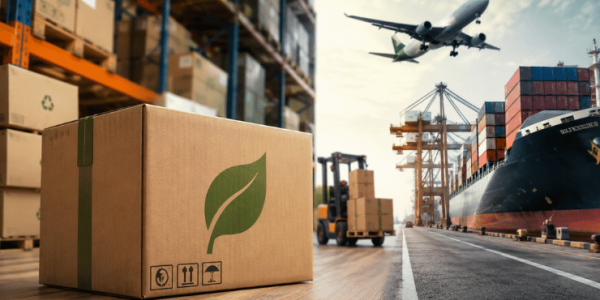
Packaging Eco-Design: Cargo Optimization and Financial Sustainability
Commercial packaging fulfills a dual purpose: protecting the product and determining transport efficiency. Poorly dimensioned packaging generates direct extra costs in international freight and unnecessarily increases polluting emissions. Eco-design focused on density and space optimization maximizes capacity in ocean and air freight, using ground transport as a distribution link. Below are five key criteria for applying this strategy profitably and directly.
1. Why does eliminating void space in packaging directly reduce air and ocean freight costs?
Air freight rates are calculated by taking the higher value between the actual weight of the cargo and the total space it occupies (volumetric weight). If packaging includes excess void space, the company pays to transport air at international rates.
In ocean freight, reducing the external dimensions of packaging increases the volume of units per container. By eliminating excess centimeters from each box, the load capacity per shipment increases significantly, optimizing the unit cost of ocean and air transport without compromising the physical protection of the cargo.
2. How can sustainable materials be selected to reduce total weight without compromising packaging strength?
Using more sustainable packaging does not mean compromising its protective capacity. Modern materials engineering makes it possible to replace excessively thick cardboard layers or non-recyclable plastics with high-density corrugated cardboard structures and treated recycled fibers.
Through technical testing of crush and compression resistance, the exact thickness required for the packaging is determined according to cargo weight. This reduces the total weight of air shipments and ensures that boxes withstand continuous stacking in ocean containers during long journeys.
3. How does standard dimensional design optimize space utilization on transport platforms and containers?
Cargo transport space is primarily wasted by packaging that does not match the standard dimensions of the wooden or plastic platforms on which goods are stacked. When boxes overhang the base, they suffer structural damage; if they are smaller than required, they create inefficient gaps.
Precise dimensional design requires planning the box around ocean container dimensions and aircraft cargo holds. This ensures stable cargo blocks, eliminates the need for additional plastic void fillers, and maximizes the amount of product dispatched in each shipment.
4. What is the real impact of packaging eco-design on reducing the company's polluting emissions?
The supply chain's carbon footprint is directly linked to the volume and weight transported. Aircraft and vessels require higher fuel consumption as tonnage and the space needed to move the same amount of inventory increase.
More compact, lightweight packaging makes it possible to transport more units in a single ocean or air shipment, reducing the total number of trips required. This proportionally lowers the carbon dioxide emissions associated with international transport fuel and the final overland leg.
5. How is the investment in packaging redesign justified through transport operation savings?
The financial analysis of eco-design should not be limited to the cost per box, but to the total cost of the cargo delivered to its destination. Although developing new packaging requires an initial investment, it is quickly recovered through lower operational expenses.
Savings stem from three factors: reduced volume charges in air freight, higher cargo density in ocean containers, and decreased use of secondary packaging materials. The return on investment is positive in the short term, turning sustainability into a direct economic advantage.
